Coffee beans compared: Borbone or Kimbo?
Start with the drink you make most often, then compare specific Borbone and Kimbo blends by their composition, roast and tasting notes. Use the same recipe for the first tasting so you can compare the coffee itself.
Borbone or Kimbo: which coffee beans suit your espresso, café crème or cappuccino? The brand name alone tells you very little. Here you can learn how to compare specific blends by their composition, roast and description, then match your choice to your brewing method.
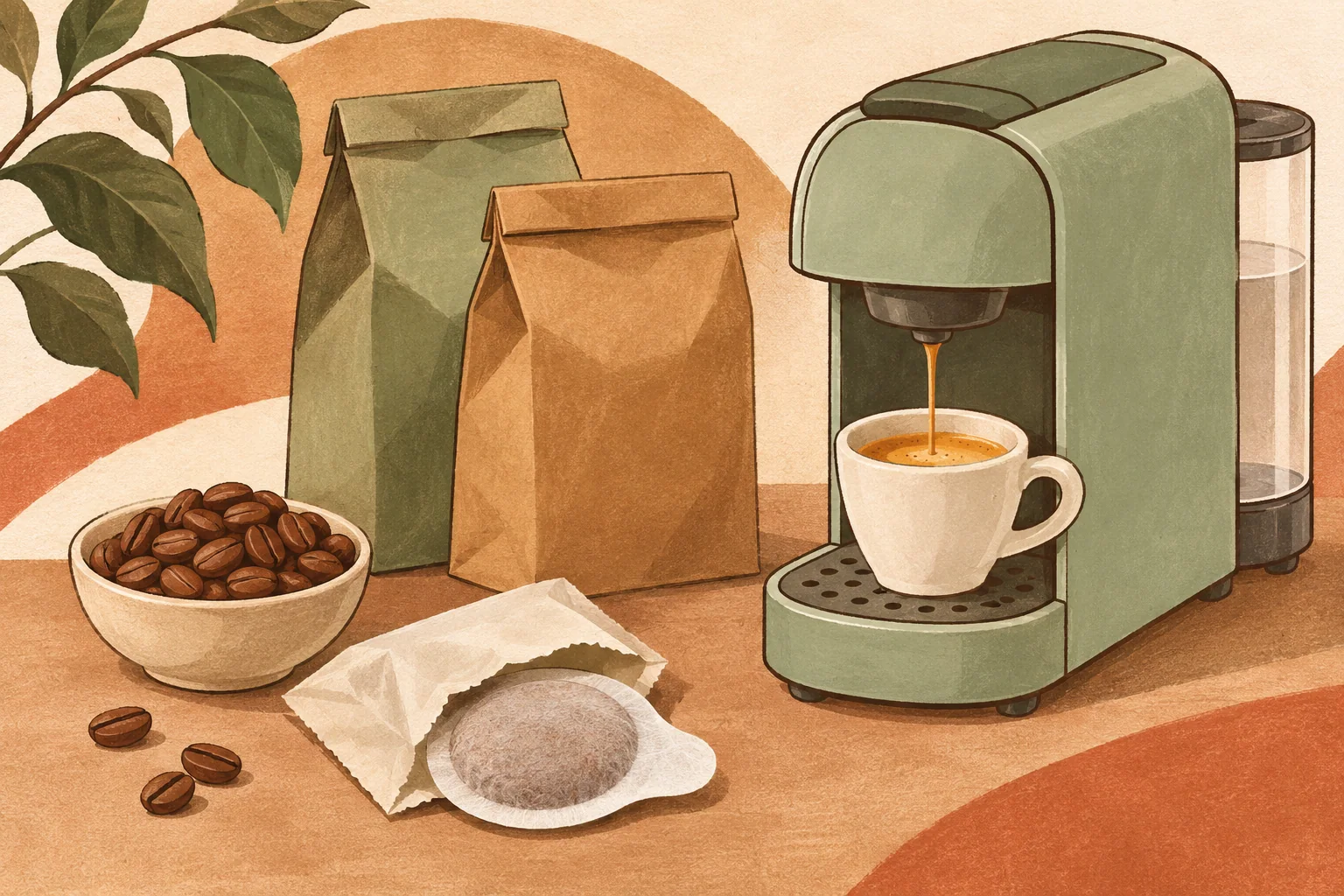
The quick answer: compare the blend
Choose your drink and brewing method first, then the beans. Next, look for a specific blend with an aroma description that suits your taste. Borbone is not necessarily stronger, nor Kimbo necessarily milder. Both brands offer different products. Even “100 % Arabica” primarily describes the composition; it does not decide which coffee you will prefer. A useful starting point is therefore the individual pack, with its exact product name, whole-bean format and manufacturer’s information.
Four examples from the manufacturers at a glance
| Product and format | Composition | Described profile |
|---|---|---|
| Borbone Vending Miscela Blu, 500 g | Arabica and Robusta | Creamy, balanced, distinctive |
| Borbone Vending Miscela Rossa, 500 g | 100 % Robusta | Intense, pronounced |
| Kimbo Aroma Gold, whole beans, 500 g | 100 % Arabica | Flowers, almonds; medium roast |
| Kimbo Intenso, whole beans, 500 g | Arabica and Robusta | Toasted notes, spices; medium roast |
The information applies to the named 500 g packs of whole beans. For other pack sizes, pods, capsules and product ranges, check the relevant product page or packaging.
Borbone: check the product range too
For Vending Miscela Blu in 500 g, Borbone specifies a blend of Arabica and Robusta and describes it as creamy and balanced, with a distinctive character. By contrast, Vending Miscela Rossa in 500 g is listed as 100 % Robusta with an intense flavour. These two examples already differ in their composition.
Both belong to the Vending range for coffee vending machines. For your bean-to-cup or portafilter espresso machine, also check the relevant machine recommendations and product information. The full product name helps you identify the right range.
You can find the brand’s products in our Borbone range. Look for the coffee beans product type.
Kimbo: Arabica and intense blends
Aroma Gold whole beans in 500 g consist of 100 % Arabica, according to Kimbo. The manufacturer specifies a medium roast with floral and almond notes. This information helps if you are looking for those particular aromas; it does not guarantee a specific taste in every machine.
Intenso whole beans in 500 g combine Arabica and Robusta instead. Kimbo describes toasted and spicy notes and also lists a medium roast. Like Borbone, Kimbo therefore cannot be reduced to a single flavour profile.
In the Kimbo range, you can browse the individual products and their information.
Understanding Arabica, Robusta and roasting
Arabica and Robusta are different coffee species, used separately or together in a blend. Composition is a useful selection criterion, but it is not a ranking. “100 % Arabica” does not automatically mean milder or better. A blend containing Robusta may suit your preferences just as well.
Roasting also shapes the flavour. Kimbo explains the influence of roasting and blending on the final profile. Consider the coffee species, roast information and aroma description together. “Intensity” is not a shared unit of measurement across brands, either: a manufacturer’s rating cannot necessarily be compared directly with a different scale.
What suits your brewing method?
Bean-to-cup machine: Start with the recommendations for your machine and those on the pack. Compare beans using the same drink settings. If you change the grind, coffee dose and water quantity at the same time, it becomes harder to interpret the difference.
Portafilter espresso machine: A new blend may need a different grinder setting. Start with your existing recipe and adjust just one variable at a time. Assess aroma, bitterness and mouthfeel separately.
Filter, French Press or Moka: Follow the recommended preparation method and grind to suit your brewing technique. An espresso description alone does not tell you whether you will enjoy the same beans in a longer drink. For cappuccino, it is also worth comparing with your usual amount of milk, as that is the drink you want to choose beans for.
Choose your beans in four steps
- Decide on your drink: Are you looking for beans for a short espresso, a longer coffee or a milk-based drink?
- Name your preferences: Note down, for example, toasted notes, nutty aromas or a pronounced mouthfeel. That is more specific than “strong”.
- Compare suitable products: Check the format, composition, roast and manufacturer’s description. Compare as few blends as possible at the same time.
- Start with consistent settings: Keep your preparation the same at first and note what you enjoy. Then adjust one setting.
These steps also help when comparing other roasters. The individual product remains the deciding factor. Explore our coffee beans and read the information for each product. If you are looking for pods or capsules instead, the coffee compatibility finder helps you choose the right system.
Frequently asked questions
Is Borbone stronger than Kimbo?
There is no meaningful answer for entire brands. Compare specific blends and take your brewing method into account.
Is 100 % Arabica always the better choice?
The label describes the coffee species used. Whether you enjoy the beans also depends on the roast, aroma profile and preparation.
Which beans should I choose first?
Start with a blend whose description matches your usual drink. For personalised guidance, use our contact page to tell us about your machine and taste preferences.
Sources
Manufacturer information, accessed on 4 November 2026: Borbone Vending Blu 500 g, Borbone Vending Rossa 500 g, Kimbo Aroma Gold 500 g, Kimbo Intenso 500 g and Kimbo: coffee and roasting.
Compare Caffè Vergnano Antica Bottega as well
If you want a milder comparison with Borbone and Kimbo, look at Antica Bottega whole beans, 1 kg. Vergnano describes Antica Bottega in the manufacturer’s description as sweet and delicate, with slight acidity and a full body. Check that you are choosing whole beans, then compare the current CHF price per kilo.
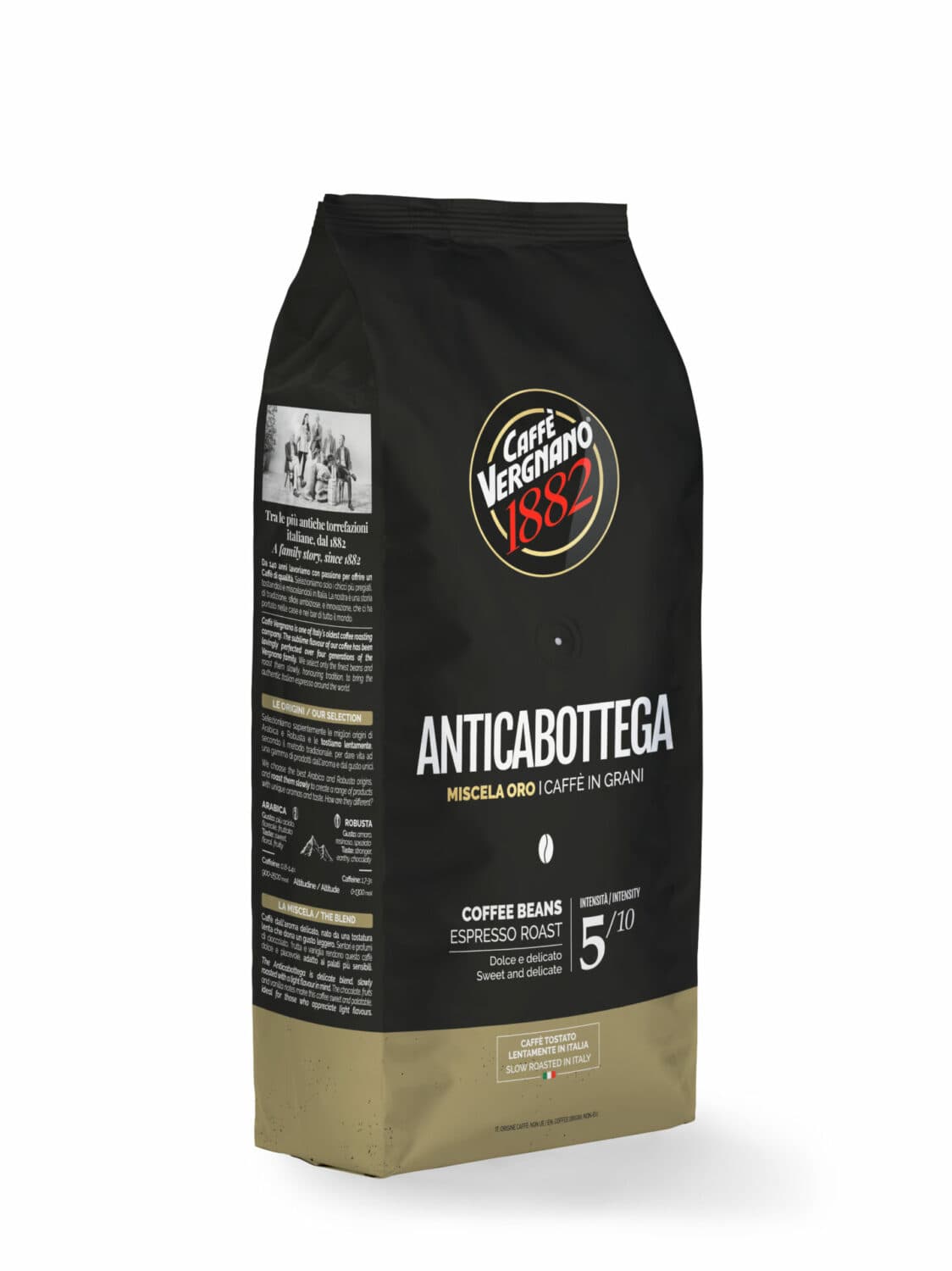
The Antica Bottega from the brand Caffé Vergnano 1882 is made up of 100 percent of fine Arabica beans from Central America. The coffee varieties are roasted separately depending on their origin, making it possible to achieve the desired roast level in each case. In addition, the beans are traditionally processed in a slow roasting process, with cycles lasting between 18 and 22 minutes. The variety Bottega is particularly characterized by its very light taste due to the Central American green coffee and also features a lasting crema. The expressive body is excellently rounded off by a slight …