Backflushing an espresso machine: when a blind basket is safe
Use a blind basket only when your machine’s manufacturer specifies it. Follow the instructions for the cleaning cycle, detergent and final rinse.
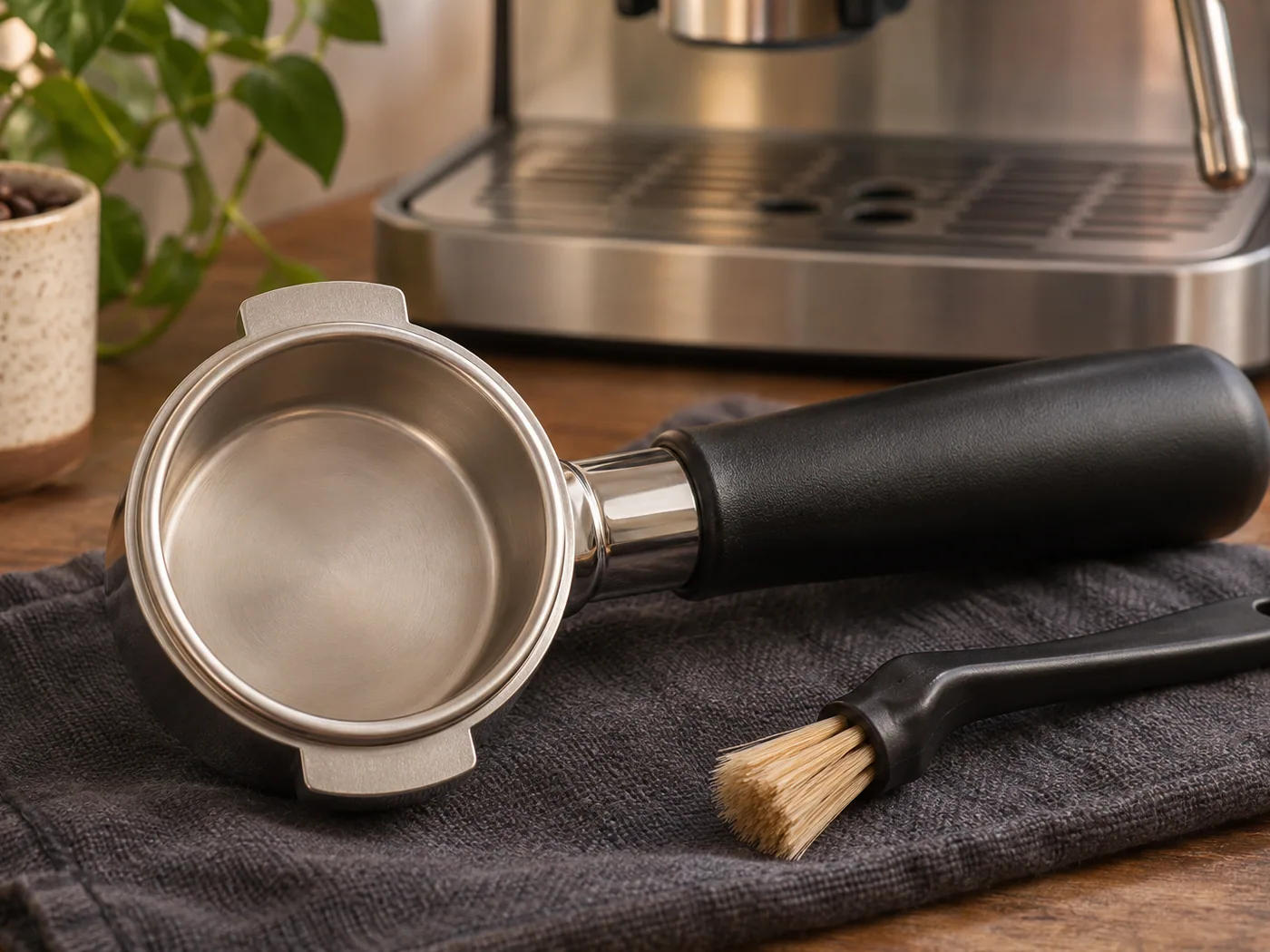
Backflush an espresso machine only if the manufacturer specifies it for your exact model. A blind basket has no holes, so it blocks the usual outlet. The size of the portafilter alone does not tell you whether the machine has a suitable drain or a cleaning cycle designed for this procedure.
Read the manual before choosing an accessory
Look for “backflush”, “group cleaning” or “cleaning cycle” in your manual. Check which accessory and detergent the manufacturer specifies. Some machines use a blind basket, while others need a dedicated cleaning insert. If your manual does not mention backflushing, ask the manufacturer and follow the documented cleaning method in the meantime.
Run the cleaning cycle for your model
Make sure there is room in the drip tray. Fit the specified accessory and use detergent only in the amount and programme stated in the instructions. Keep the portafilter locked in place during the cycle. Remove it once the programme has finished and the manual says it is safe. Then rinse the accessory and the machine with clean water as directed. On compatible La Marzocco models, for example, the app guides you through the cycle.
Keep backflushing and descaling separate
Backflushing removes coffee residue from the part of the group designed for that cycle. Descaling deals with mineral deposits in the water circuit and follows a separate procedure. You can also clean visible residue from the basket or spout as directed. An improvised backflush with a blind basket cannot replace the correct care for your model.
La Marzocco’s cleaning and backflushing instructions. Espresso machine care and descaling.