Coffee labels: roast date and best-before date explained
The roast date tells you when the coffee was roasted. The best-before date refers to its quality when stored as directed.
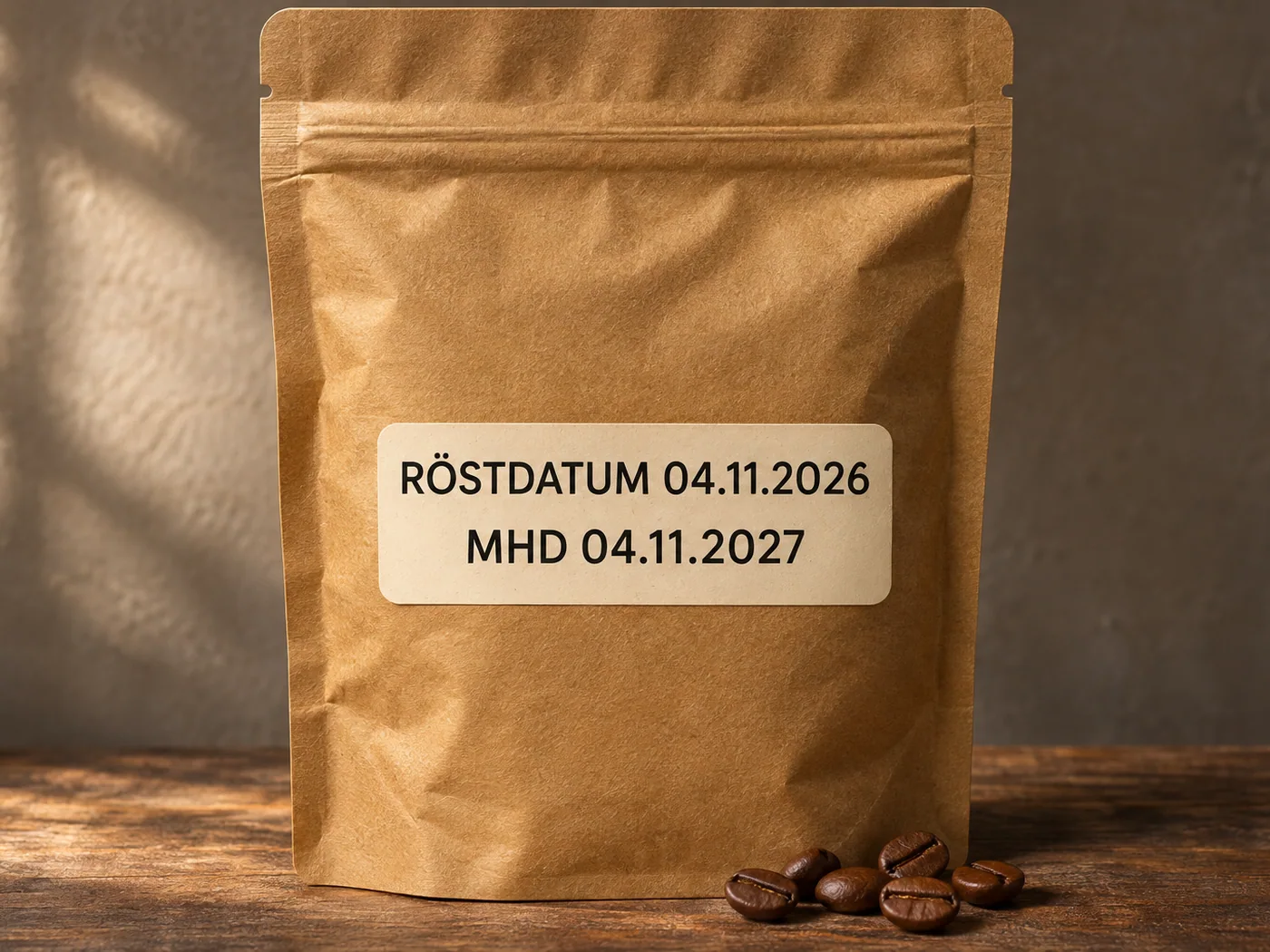
The roast date tells you when the coffee was roasted. The best-before date tells you how long it retains its quality when stored as directed. You cannot work out the roast date from a best-before date alone. Two bags with the same best-before date may have been roasted at different times.
Find the dates on the bag
Look on the front, the back and along the seals. Read the words before the number, as a batch code can sit beside a date. If the roast date is not given, you cannot reliably tell from the label how long ago the beans were roasted. When comparing a bag with one you bought before, also note the roast level, the coffee variety and how you brewed it.
Read the best-before date in context
In Switzerland, the Federal Food Safety and Veterinary Office distinguishes the best-before date from the use-by date. The best-before date concerns qualities such as flavour and smell when the product is stored correctly. A use-by date concerns the safety of perishable food. Follow the instructions on the bag, including any guidance on storage after opening.
Buy an amount that suits your routine
Weigh your usual dose and work out how much you use in a week. If you make two coffees a day with 16 g per cup, you use 224 g in seven days. That example gives you a way to compare different bag sizes. The right size also depends on how often you make this particular coffee.
FSVO guidance on food labelling. How to store coffee beans, pods and capsules.